

Keynius alternative: smart lockers or the whole workplace?
Keynius builds lockers, locks and locker software in the Netherlands, for offices, venues and public spaces. Awaio runs lockers with its own locks too, and connects them to door access, desks, rooms and parking in one system and one app.
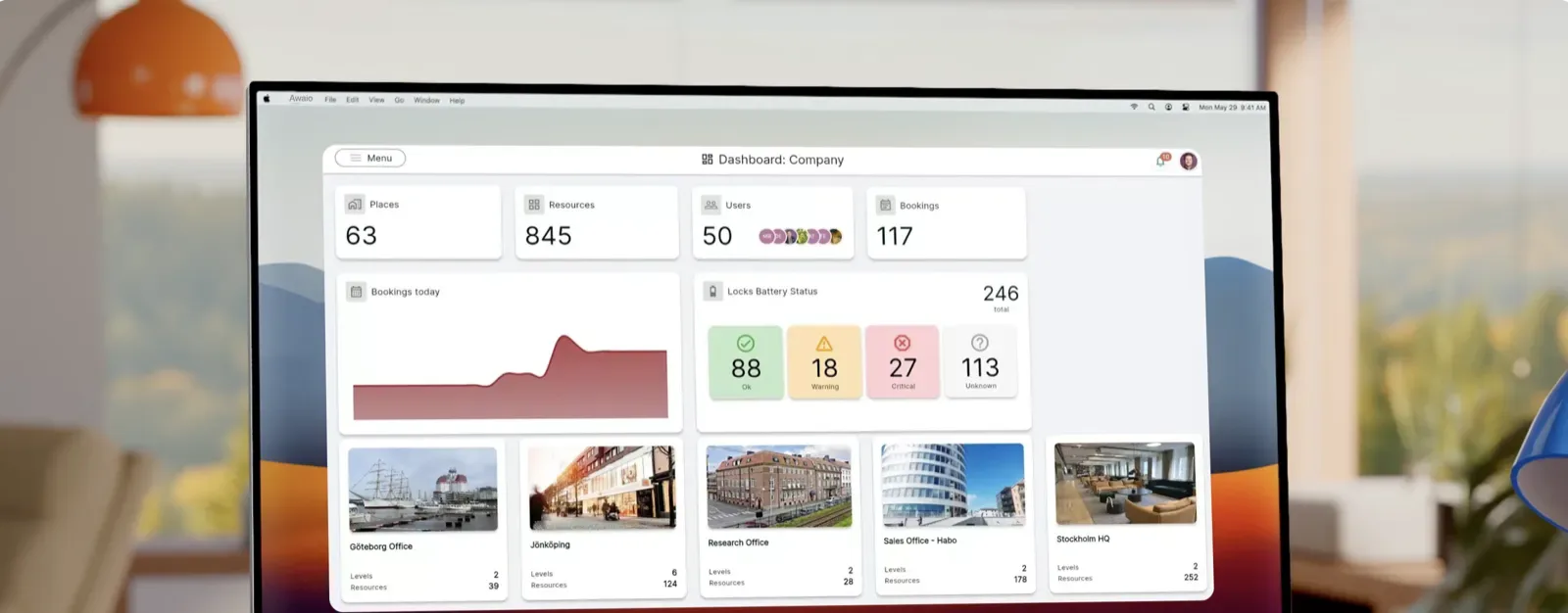
Awaio made this page to help you compare Awaio and Keynius. It’s based on public sources such as each vendor’s website, documentation and app store listings. Brand and product names belong to their owners.
Last verified October 2026
Key differences
- One system or several: Keynius focuses on lockers and links to platforms such as GoBright for desks and rooms. Awaio runs lockers, desks, rooms and parking in one system.
- One app for every door: The Keynius app opens lockers. With Awaio, the same app also opens building entrances, gates and parking barriers.
- Built for different places: Keynius serves venues, transit, retail and offices, with paid guest lockers as a large focus. Awaio is built for workplaces and multi-tenant buildings.
- Pricing: Keynius lockers are bought, leased or paid for through revenue sharing, with no public prices. Awaio is priced per resource, with unlimited users, and you can start with one module.
Feature comparison
Lockers and access
Locker management
- Keynius
- Yes Employee, visitor, parcel, IT asset and paid rental lockers[1]
- Awaio
- Yes
Keynius also covers rental and venue lockers. Awaio adds Grab & Go and e-bike battery charging lockers, in the same app as desks and rooms.
Digital locks
- Keynius
- Yes Own wired and battery locks, also for retrofits[2]
- Awaio
- Yes Open with phone, RFID card, PIN or fingerprint
Both build their own locks. Awaio locks open by phone, RFID card, PIN or fingerprint, and run in the same system as desks and rooms.
Mobile access to doors
- Keynius
- Partly Phones open lockers, by app, web link or wallet pass[2]
- Awaio
- Yes
Keynius documents phone access for lockers. Awaio uses the same phone for lockers, building doors, gates and parking barriers.
Access cards
- Keynius
- Yes Existing building access cards, including MiFare and HID[3]
- Awaio
- Yes Locks read the RFID cards people already carry
Both reuse the badges people already carry. Keynius lists MiFare and HID, and Awaio locks read existing RFID cards.
Access control hardware
- Keynius
- Not in public documentation[4]
- Awaio
- Yes Smart Access Box
Keynius lists access control partners but documents no door hardware of its own. The Awaio Smart Access Box connects existing doors and barriers to the app.
NFC service points
- Keynius
- Partly Wallet passes and QR codes at the locker[5]
- Awaio
- Yes TapCard and TapDot: tap the phone to book or open
Keynius uses wallet passes and QR codes at the locker itself. Awaio TapCards and TapDots also sit at desks, rooms and doors, to book or open with a tap.
Parcel and delivery handling
- Keynius
- Yes Parcel lockers with SMS, email or app notices[6]
- Awaio
- Yes Parcel lockers with a notice when the delivery is ready
Both notify the recipient when a parcel arrives. With Awaio, that notice lands in the app staff already use for desks and rooms.
E-bike battery charging lockers
- Keynius
- Not in public documentation[3]
- Awaio
- Yes Indoor and outdoor e-bike battery charging lockers
E-bike battery charging lockers are not in Keynius’ public documentation. Awaio runs them indoors and outdoors.
Booking
Meeting room booking
- Keynius
- Not in public documentation[4]
- Awaio
- Yes
For meeting rooms, Keynius points to partners such as GoBright. In Awaio, you book rooms in the app that opens the lockers.
Desk booking
- Keynius
- Not in public documentation[4]
- Awaio
- Yes
Keynius links to partner platforms for desks and documents no desk booking of its own. In Awaio, employees pick a desk and a locker in one app.
Parking booking
- Keynius
- Not in public documentation[7]
- Awaio
- Yes
Parking does not appear in Keynius’ public material. In Awaio, you book parking spaces next to lockers and desks.
Recurring bookings
- Keynius
- Not in public documentation[3]
- Awaio
- Yes
Keynius documents assigned and flex lockers, not repeat reservations. In Awaio, the same room, desk or parking space every week takes one booking.
Book on behalf of others
- Keynius
- Partly Admins assign lockers, and couriers and reception place items for others[1]
- Awaio
- Yes Admins and reception book for others, and colleagues can share bookings
Keynius covers locker assignment and courier drop-offs. In Awaio, admins and reception book for others across the workplace, and colleagues can share bookings.
Interactive floor plans
- Keynius
- Not in public documentation[4]
- Awaio
- Yes
Keynius shows no office maps in its public material. Awaio places lockers, desks and rooms on a live floor plan.
Indoor wayfinding
- Keynius
- Not in public documentation[7]
- Awaio
- Yes Live map of rooms, desks and colleagues, with real-time occupancy
Keynius helps people find a free locker but documents no indoor routes. Awaio shows on the map where your locker, desk or room is.
Check-in and auto-release
- Keynius
- Partly Flex lockers release after use or after a set time[3]
- Awaio
- Yes
Keynius releases flex lockers after use or after a set time. Awaio frees lockers too, plus desk and room bookings nobody checked in to.
Payments for bookings
- Keynius
- Yes [8]
- Awaio
- Yes Paid parking and other paid bookings
Both take payments. Keynius focuses on paid guest lockers, while Awaio handles paid parking and other paid bookings in the same app.
Custom booking forms
- Keynius
- Not in public documentation[2]
- Awaio
- Yes Custom forms for rooms, pool cars and more
Booking questions are not in Keynius’ public documentation. Awaio can add your own questions when someone books a room or pool car.
Events and registration
- Keynius
- Not in public documentation[7]
- Awaio
- Yes Events with registration in the app
Event management is not in Keynius’ public documentation. Awaio runs events with registration in the same app as lockers and desks.
Booking quotas
- Keynius
- Partly Role and time rules for who can use which lockers[9]
- Awaio
- Yes Quotas set in the booking rules
Keynius sets who may use which lockers by role and time. Awaio admins add quotas to booking rules, so each workplace limits bookings its own way.
Integrations
Calendar sync
- Keynius
- Not in public documentation[4]
- Awaio
- Yes Outlook and Google Calendar
Keynius documents no calendar integration. Awaio syncs bookings with Outlook and Google Calendar, so they sit next to your meetings.
Your own calendar in the app
- Keynius
- Not in public documentation[4]
- Awaio
- Yes Work and private calendars from Microsoft and Google, in the app and on the web
A personal calendar view is not in Keynius’ public documentation. The Awaio app shows your meetings beside your bookings, on your phone too.
Single sign-on
- Keynius
- Microsoft Entra ID and Okta[4]
- Awaio
- Yes Microsoft 365 and Google Workspace
Both offer single sign-on. Keynius lists Entra ID and Okta, while Awaio users sign in with Microsoft 365 or Google Workspace.
Outlook add-in
- Keynius
- Not in public documentation[4]
- Awaio
- Yes Book desks, rooms, parking and lockers from Outlook
Keynius documents no Outlook add-in. With the Awaio add-in, people book lockers, desks, rooms and parking without leaving Outlook.
Meeting room displays
- Keynius
- Not in public documentation[2]
- Awaio
- Yes Works with Microsoft Teams Rooms. QR codes and TapCards replace door displays.
Keynius shows terminals at locker walls, not at meeting rooms. Awaio works with Microsoft Teams Rooms and puts QR codes and TapCards by the door.
Mobile app
- Keynius
- Yes [10]
- Awaio
- Yes
The Keynius app finds, reserves and opens lockers. The Awaio app does that too, and also opens doors, books desks and rooms, and shows maps.
Building system integrations
- Keynius
- Yes [4]
- Awaio
- Yes Access control systems through Inlet
Both connect to access control. Awaio also brings sensor and indoor climate data into the same system.
API and webhooks
- Keynius
- Partly Open API for PMS, POS, ERP and identity systems[2]
- Awaio
- Yes API and webhooks
Keynius describes an open API, with no public reference or webhooks. Awaio offers both an API and webhooks for connecting your other systems.
Communication
Notifications
- Keynius
- Yes [6]
- Awaio
- Yes Push and email
Keynius sends notices about parcels and locker time limits. Awaio sends push and email notices for lockers, desks, rooms and parking.
Messages to everyone in the workplace
- Keynius
- Not in public documentation[6]
- Awaio
- Yes
Keynius notices are tied to single lockers and parcels. With Awaio, you send one message to everyone in a building from the app.
Admin and analytics
Utilisation analytics
- Keynius
- Yes [1]
- Awaio
- Yes
Both report on usage. Keynius reports on lockers and assets, while Awaio shows locker, desk and room use side by side.
User roles and permissions
- Keynius
- Yes [2]
- Awaio
- Yes
Both have role-based admin. Awaio splits roles by bookings, locks, reports and billing.
Security, support and pricing
EU data hosting and GDPR
- Keynius
- Microsoft Azure in the EU or the USA. ISO 27001 certified.[11]
- Awaio
- Yes Hosted in the EU. GDPR compliant, DPA on request.
Keynius hosts on Azure in the EU or the USA. Awaio keeps data in the EU and signs a DPA on request.
Support
- Keynius
- Email and phone in business hours, plus local partners[12]
- Awaio
- Chat and email in English, Swedish and Norwegian. Weekdays 08–17 CET.
Keynius supports customers by email, phone and local partners. Awaio support answers in English, Swedish and Norwegian.
Pricing model
- Keynius
- Buy, lease or share revenue. No public prices.[8]
- Awaio
- Per resource, not per user. Unlimited users.
Keynius sells, leases or shares revenue, without public prices. Awaio is priced per resource, not per user, with unlimited users.
Not in public documentation: we found no mention of it on the Keynius website, help centre or app store listings.


Why teams choose Awaio over Keynius
Lockers and the rest of the office in one place
Keynius covers lockers and leaves desks and rooms to partner platforms. Awaio runs lockers, desks, rooms, parking and door access itself, in one app.
Works with the lockers you have
Awaio locks fit existing locker doors, sliding doors and drawers, and read the RFID cards people already carry. The Smart Access Box connects existing doors and barriers.
Start where Keynius starts: with lockers
Begin with one locker room, then add desks, rooms or doors without a second vendor. Priced per resource with unlimited users, and works with Microsoft 365 and Google Workspace.
One system for the whole workplace
Start with one module. Add the rest when you need them.
- Room booking Book meeting rooms from the app, Outlook or a QR code.
- Desk management Book desks, see who’s in and plan the week.
- Locker management Assign and open lockers from the phone.
- Parking Book parking and share spaces fairly.
- Mobile access Open doors with the phone instead of a card.
- Wayfinding Find rooms, desks and colleagues on the map.
- Workplace communication Reach everyone in the workplace with one message.


FAQ
Questions about Awaio and Keynius
Yes, if lockers are only part of what you need. Keynius specialises in lockers and leaves desks and rooms to partners. Awaio has its own locks and also runs door access, desks, rooms and parking, and you can start with lockers alone.
Awaio locks retrofit existing locker doors, sliding doors, double doors and drawers, so a move does not have to start with new cabinets. The Card + Bluetooth and Multi-Access locks read the RFID cards staff already use.
Keynius offers its lockers to buy outright, to lease or on a revenue-share model, and does not list prices on its website. Awaio is priced per resource, not per user, with unlimited users, and hardware is priced separately.
Keynius links its lockers to workplace platforms such as GoBright and Eptura for desk and room booking. With Awaio, lockers, desks, rooms and parking are already in one system, so there is no second platform to connect.
In Keynius’ public documentation, the app opens lockers and door access is left to access control partners. In Awaio, one app opens lockers, entrances, gates and parking barriers, and access follows each person’s role or booking.
Keynius lists Microsoft Entra ID and Okta for sign-in. Awaio supports sign-in with Microsoft 365 and Google Workspace, syncs bookings with Outlook and Google Calendar, and has an Outlook add-in for desks, rooms, parking and lockers.
Sources
- [1] keynius.eu/industry/corporate-workspace · accessed 2026-10-26
- [2] keynius.eu/products · accessed 2026-10-26
- [3] keynius.eu/solutions/personal-staff-storage · accessed 2026-10-26
- [4] keynius.eu/integrations · accessed 2026-10-26
- [5] keynius.eu/blog-posts/smart-locker-authentication-methods · accessed 2026-10-26
- [6] keynius.eu/solutions/parcel · accessed 2026-10-26
- [7] keynius.eu · accessed 2026-10-26
- [8] keynius.eu/solutions/pay-store · accessed 2026-10-26
- [9] keynius.eu/solutions/asset-equipment-management · accessed 2026-10-26
- [10] apps.apple.com/us/app/keynius/id1559340514 · accessed 2026-10-26
- [11] keynius.eu/privacy-statement · accessed 2026-10-26
- [12] keynius.eu/contact · accessed 2026-10-26
More comparisons
- Awaio vs Microsoft Places
- Awaio vs Kadence
- Awaio vs Robin
- Awaio vs Envoy
- Awaio vs Skedda
- Awaio vs Deskbird
- Awaio vs Archie
- Awaio vs Officely
- Awaio vs anny
- Awaio vs Welcome Workdays
- Awaio vs Life@Work
- Awaio vs Flexlock
- Awaio vs Vecos
- Awaio vs Flowscape
- Awaio vs Humly
- Awaio vs MazeMap Workplace
- Awaio vs GoBright
- Awaio vs Eptura Engage
- Awaio vs KiiOn
- Awaio vs Tidaro
- Awaio vs Parkable
- Awaio vs Joan
- Awaio vs Wayleadr
- Awaio vs Ronspot
- Awaio vs Parkalot
- Awaio vs Tactic
- Awaio vs YAROOMS
- Awaio vs Sharvy
- Awaio vs Mapiq
- Awaio vs OfficeRnD Workplace
- Awaio vs OfficeSpace
- Awaio vs Smartway2
- Awaio vs Modo Labs
- Awaio vs Matrix Booking
- Awaio vs Appspace
- Awaio vs Yoffix
- Awaio vs Spacent
- Awaio vs Flexopus
- Awaio vs Comeen
- Awaio vs Equiem
- Awaio vs HqO
- Awaio vs Parakey
- Awaio vs Unloc
- Awaio vs Spaceflow
- Awaio vs Chainels
- See all comparisons


The intelligence behind better workplaces.
Connecting people, spaces and services to simplify everyday work.